
Building the future of Liefstyle AI orchestration.
AI Agents
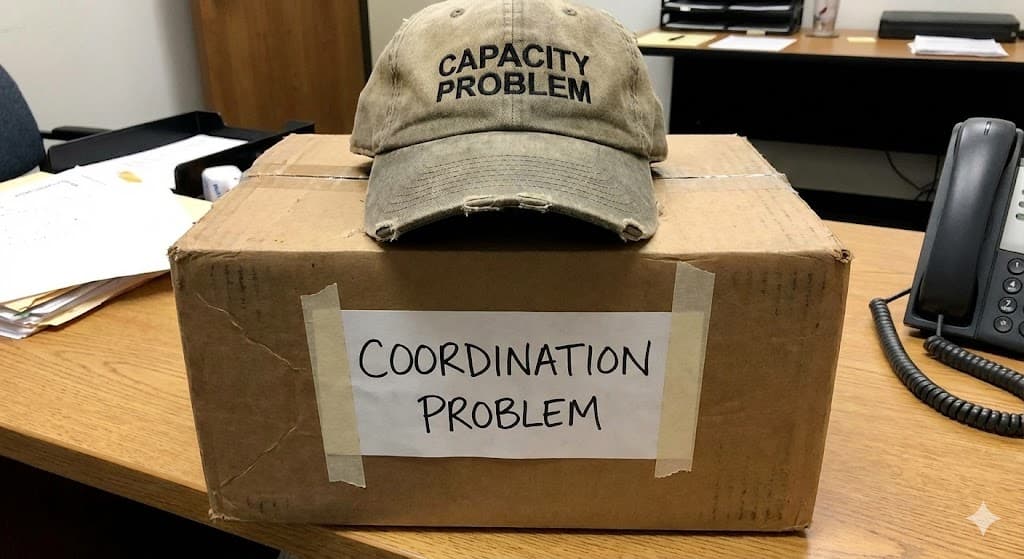
A coordination problem wearing the costume of a capacity problem
The agentic economy's infrastructure bottleneck is misdiagnosed as a capacity shortage. The actual constraint is coordination waste: agents interfering with each other through retry spirals, fanout amplification, queue contention, and blast radius expansion, converting infrastructure investment into invisible overhead. The waste fraction is not fixed but grows with agent density, meaning overprovisioning structurally breaks at scale. Historical parallel: early steam engines wasted 80-95% of energy before the flyball governor solved coordination without adding capacity. Agentic AI is in its pre-governor era. A coordination layer reading behavioral signals before waste occurs is the missing infrastructure, and the difference between the projected trillions and a very expensive bonfire.
IoT
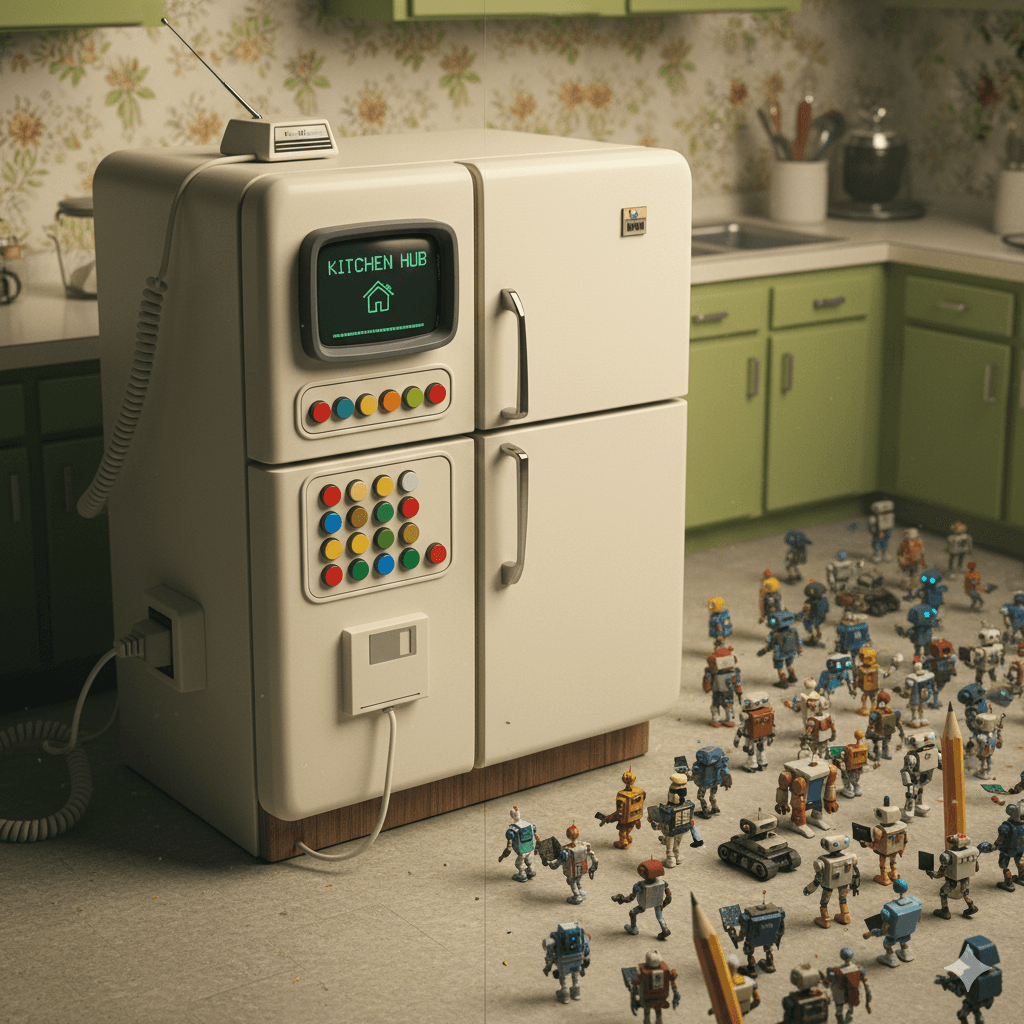
A short, human history of the Internet of Things
How IoT went from a Coke machine at Carnegie Mellon to the most expensive unsolved problem in AI. The coordination gap that plagued connected devices for three decades never closed. Now agentic AI is hitting the same wall at higher speed and higher cost. This is the history of a problem that finally found its moment.

AI Agents
Affordances are bidirectional. We've only been listening to half the conversation.
Gibson said a cave affords shelter. He was right, but he was only hearing half the signal. The cave is also communicating outward: its geometry tells the world about the pressures that formed it and whether they are resolved. A mechanic reads the same outward signal in a car's ride. Software does it through behavioral patterns, timing drift, retry acceleration, fanout expansion, that express system state whether or not anyone is listening. We built an entire theory of affordances around what systems offer us. We ignored what they are already telling the world about themselves. The outward signal arrives first. It always has.
AI Agents
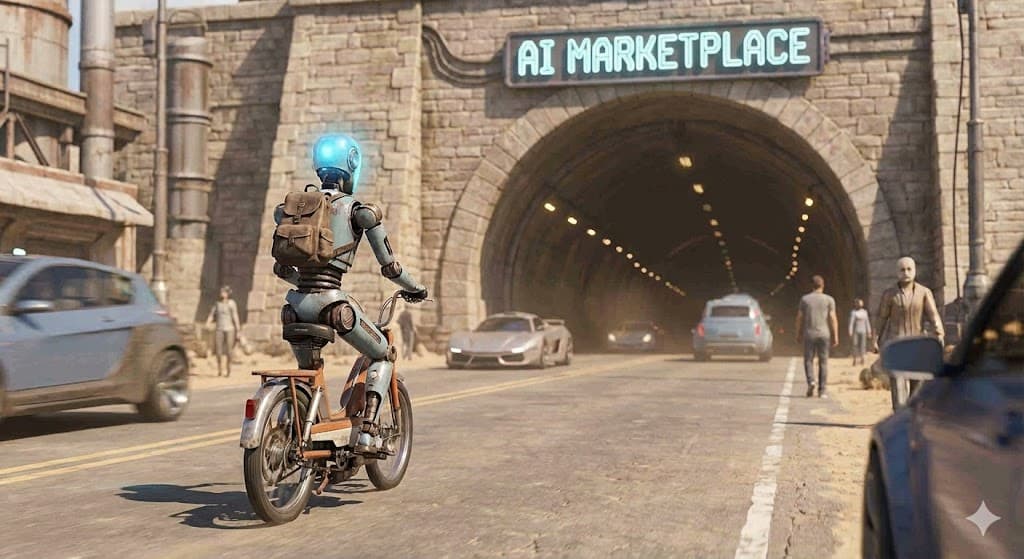
AI agents are not bots on mopeds. They are micro-platforms with mobility.
The prevailing mental model of agents as bots running errands produces the wrong infrastructure. Agents are micro-platforms: composites that ingest, produce for ingestion by other agents, extend capabilities at runtime, and traverse environments. Their interaction model is metabolic, not request-response. Platform evaluation frameworks (security, provisioning, efficiency) map partially onto agents, producing dangerous false confidence because the checklist appears complete while hiding the dimensions where agents are fundamentally new. MCP breach data demonstrates the structural pattern: attack surfaces are trajectories, not boundaries, constructed by the agent in real time. The current protocol landscape (MCP, A2A, ACP, UCP) standardizes the socket when the problem is the electricity. The unit of analysis determines the infrastructure, and the unit is wrong.

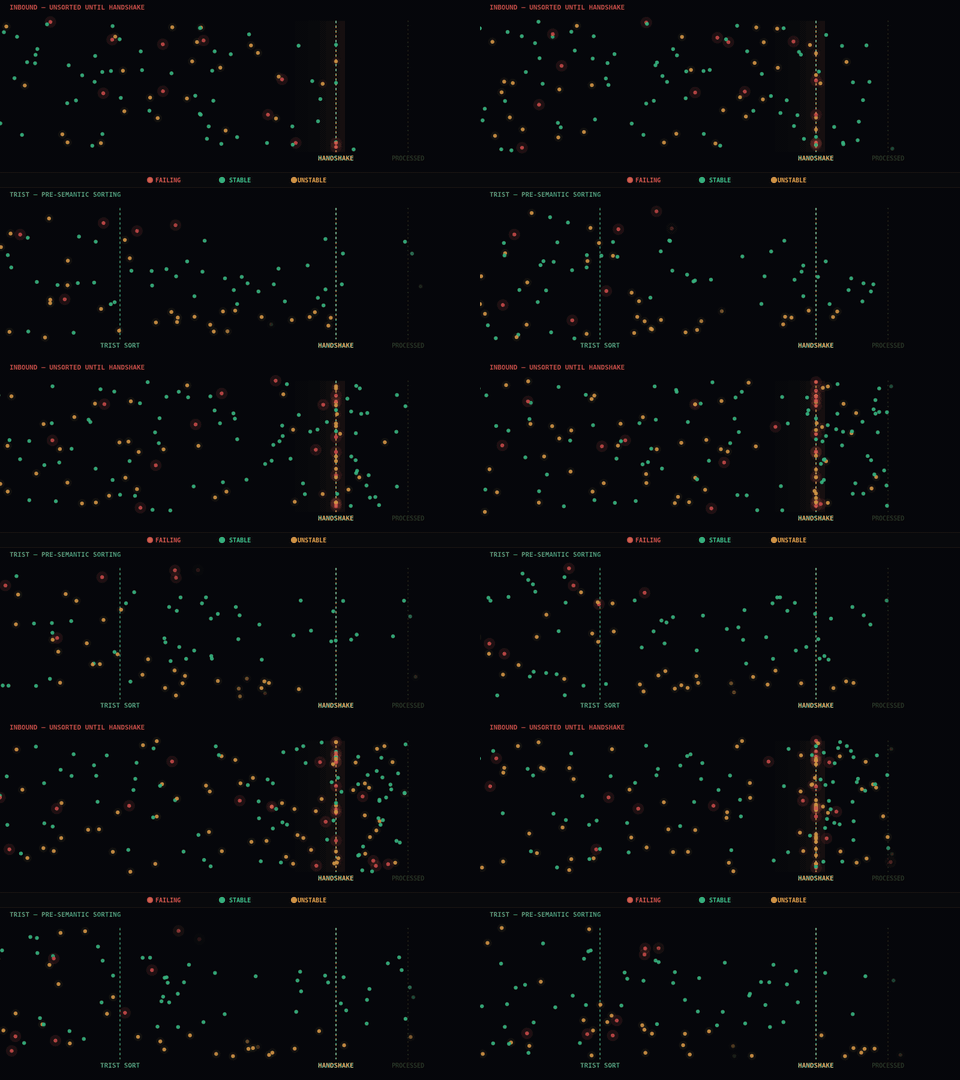
Behavior, not content: why the future of AI infrastructure is pre-semantic
Production AI fails more from coordination breakdown than semantic weakness. A pre-semantic layer coordinates interactions using behavior signals, enabling speed, privacy, and cross-org deployment. Contact us to see how Tethral’s pre-semantic protocol can save on wasted inference spend and token burn; cascading retries and workflow thrash; agent swarm fanout amplification; blast radius reduction during partial outages. info@tethral.ai Tethral enables pre-semantic coordination to reduce wasted inference spend, cascading retries, fanout amplification, and tail latency. Design partner inquiries: info@tethral.ai
Artificial Intelligence
Building the coordination layer your AI agents don’t know they need
Your agents can reason, select tools, and recover from failures. What they cannot do is see each other. When coordination is not explicitly designed, it becomes emergent, which is a polite name for a system coordinating by accident. The result is correlated retries, fanout amplification, and cascades manufactured by the system's own behavior. The missing layer is not a smarter agent. It is infrastructure that reads behavioral signals, not content, and acts before the damage hits the invoice.

AI Agents
Designing AI-native experiences: what it looks like, what it feels like, and the scariest question of all
The best AI-first experience might be one where there is nothing to see at all. That changes everything about how you design, how you build trust, and how you measure quality. Every metric we have assumes the user is interacting. What happens when the system works best by disappearing?
Orchestration
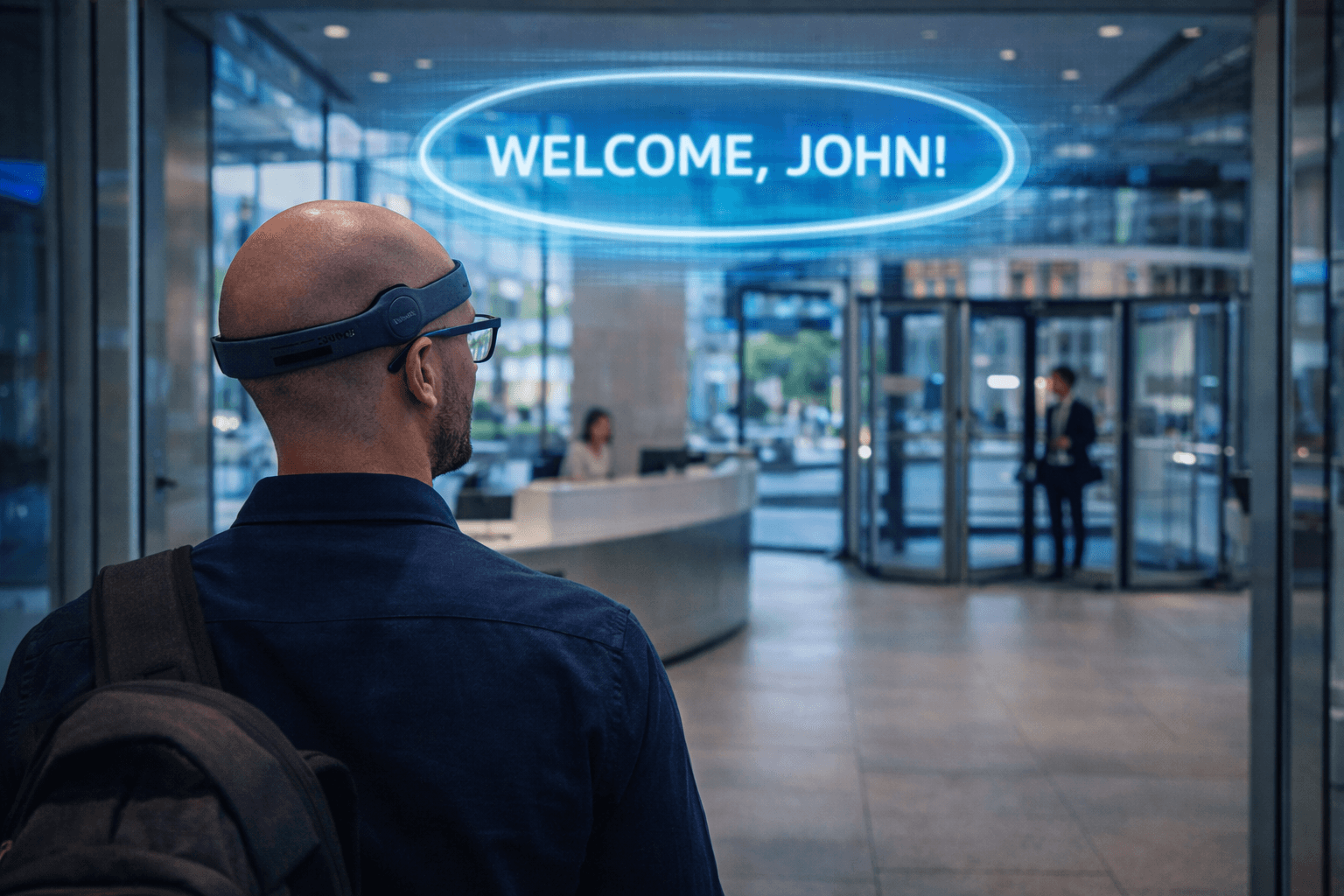
I controlled my home with my brainwaves through Tethral. This is what it looks like when AI leaves the screen.
I dimmed lights with a thought and summoned a robot for water through a brain-computer interface connected to Tethral. The technology is early. The implications are not. Meanwhile the industry is building another smart speaker. Some days I want the boombox. Some days I want the translation headphones. The connected technology industry trapped itself in walled gardens and voice-only interaction. The frontier is wider than that, and the incentive structure guarantees incumbents will not be the ones to build it.

Artificial Intelligence
IoT is the next frontier because the world is bigger than our homes
How IoT went from a Coke machine at Carnegie Mellon to the most expensive unsolved problem in AI. The coordination gap that plagued connected devices for three decades never closed. Now agentic AI is hitting the same wall at higher speed and higher cost. This is the history of a problem that finally found its moment.

Infrastructure
Machines are relational. We just pretend they aren't.
Machines are not neutral. They carry the context of their making into every interaction: timeout assumptions, retry theories, optimization priorities. When multiple machines interact, their incompatible worldviews produce coordination failures we misdiagnose as bugs. The infrastructure we need is not better debugging. It is mediation between situated perspectives that cannot mediate for themselves.

Orchestration
The 5:15 message: what it feels like when your life finally has a chief of staff
The inability to stop working is one of the defining anxieties of modern life. Not because work is bad, but because the transition from working to not working and back again has no infrastructure. Nobody told you the day was over, and you don't trust that it is. But you can't fix the end of the day at the end of the day. The fix starts in the morning, with a chief of staff that shapes your day so the 5:15 message that says nothing urgent is left is one you can actually believe. Same engine that handles Sunday night groceries, the meeting that ran long, and the water leak while you're at work.

AI Agents
What sound does software make?
A jackhammer tells you what it is doing through vibration. A subway tells you through screech. What does software tell you when it has no body? The behavioral patterns of machine coordination, timing, retries, fanout, drift, are not telemetry. They are language. And we have been treating a continuous conversation as diagnostic data. This is the intellectual origin of pre-semantic coordination, from game theory in a grad school classroom to the realization that machines arrive at every interaction already speaking.
AI Agents
What agent builders can learn from one of philosophy's most irritating questions
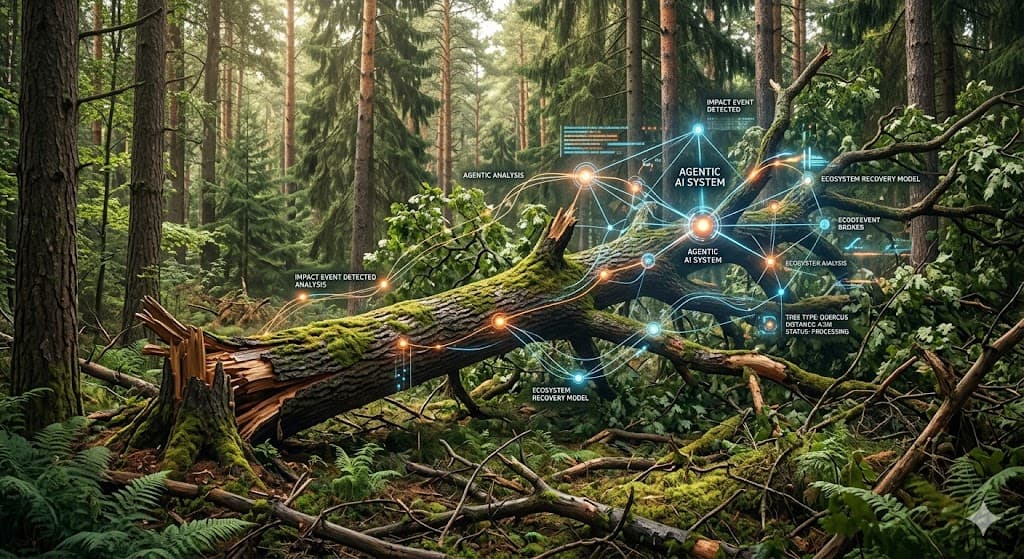
If a tree falls in the forest and no one hears it, does it make a sound? That question annoyed me for years. Then I realized it is the most important design problem in AI agents: what happens when the work is done but the human was never part of the process? The Humane Pin learned the answer the hard way.
IoT
What does it look like to biohack your home?
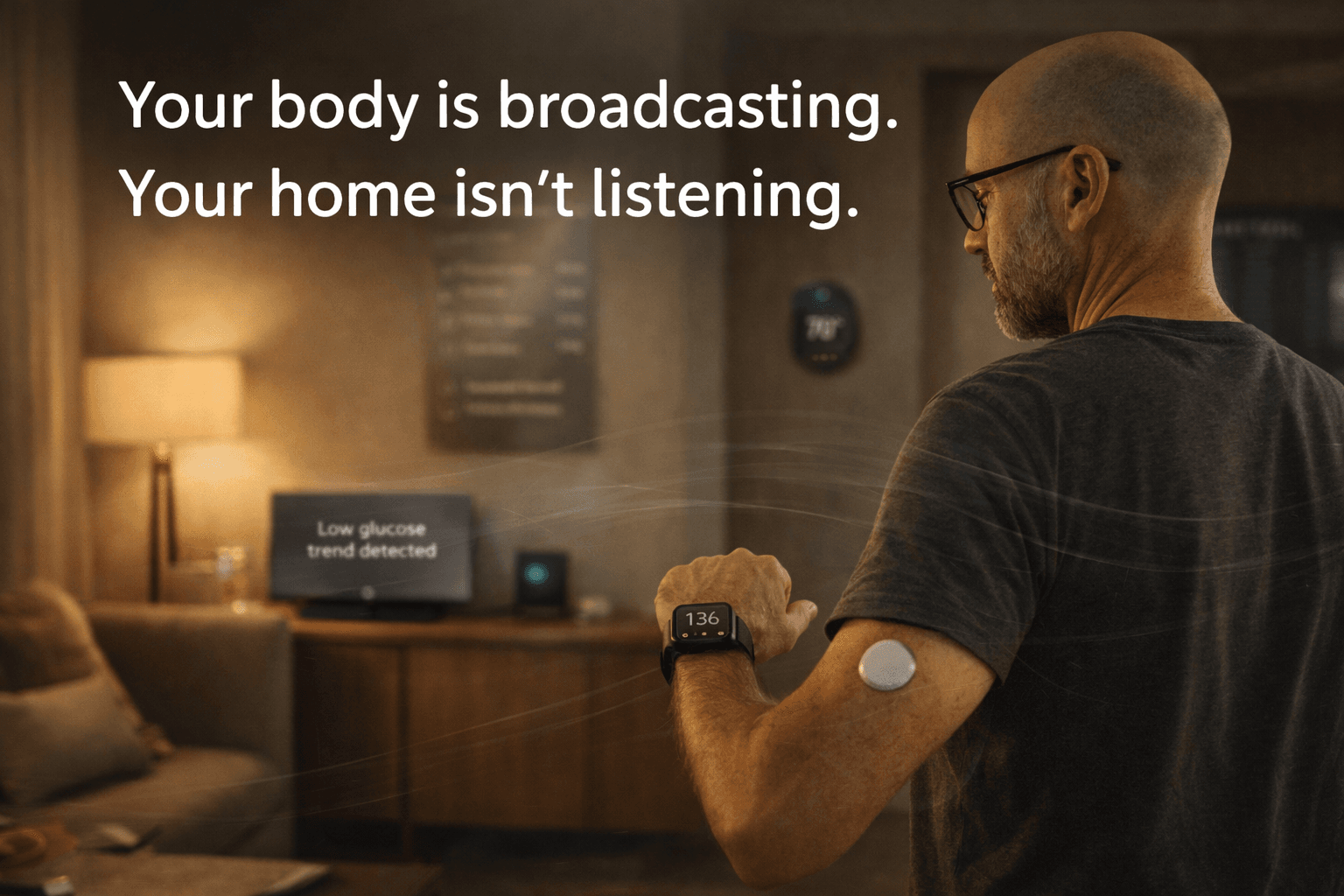
I wear a Nuro ring, an Apple Watch, and sometimes a headband that scans my brainwaves. My body is broadcasting. My home is not listening. My ring knows I slept poorly. My thermostat does not care. My headband knows when I am focused and when I am drifting. My environment does nothing with that information. The gap between what your body knows and what your environment does with it is widening every year. The sensors improve. The coordination does not.

AI Agents
What happens when AI is the user?
hat should interaction look like when AI is the one doing the interacting? In 2016 I proposed a dissertation about the native behavior of signals. It was too esoteric. Now agents are hitting checkout systems designed for humans who get embarrassed after three failed attempts. An agent retries 1,000 times across 1,000 surfaces without flinching. Social embarrassment was a rate limiter. Agents do not have one.
Orchestration
What is agentic composition and why should you care?
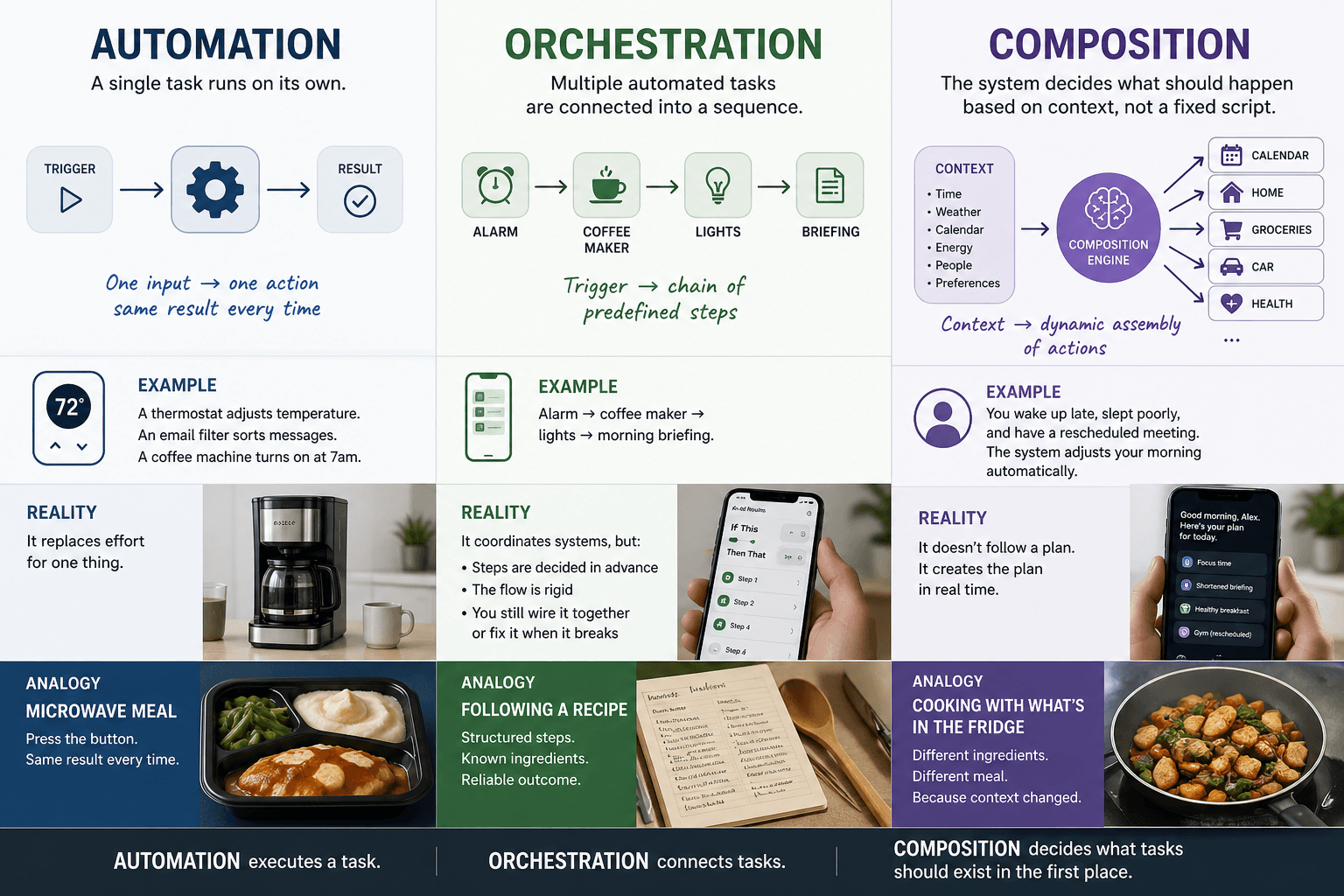
I started building Tethral because I felt like the middleware for the tech in my own life. During fire season in California, I wanted five actions across four systems at a smoke alert: close the windows, turn on the purifier, text my partner, get the kids inside, don't run the AC. It didn't work. Not because the devices couldn't do their part, but because nothing connected them. Automation handles single tasks. Orchestration weaves them together but stays rigid. Composition reads the context of your life and assembles a response from whatever systems are available. We have been treating the roof as the sky.

AI Agents
What we do not know about agent interaction should concern us more than it does
The smarter your AI agent gets, the less you know about what it is actually doing. A simple automation fails visibly. An intelligent agent fails invisibly, adapting, retrying, recovering, and delivering a result that looks identical to one where nothing went wrong. The industry's monitoring tools watch what happens inside the agent. Nobody is watching what happens between the agent and the system it touched. That space is where the cost lives. And there is a layer of interaction that happens before authentication, before protocols, before semantics, that is almost entirely unexamined.

AI Agents
Why "AI-first" design can mean two completely different things
The industry calls two completely different design problems "AI-first" and is solving neither well because of it. Designing for humans living inside AI-coordinated environments is one problem. Designing systems robust enough for AI to be the one experiencing them is another. They do not share assumptions, failure modes, or architectures. A system optimized for human emotional trust is not optimized for machine-speed parallel interaction. Separating them is where the design space opens up.

Orchestration
You don't want to do less. You want to do more of what matters.
This article is not for the version of you that needs to exhale. This one is for the version of you that is running three things on purpose. The hardest part of doing more isn't the work, it is the transitions between the work. Every hour spent as the integration layer between your own lives is an hour not spent on the thing you're trying to build. You don't want equilibrium, you want throughput. Same engine, different day, different reason to want it.
Tethral is just getting started.
Be the first to discover new features, integrations, and everything we’re building next.
Download Tethral for seamless control.