HomeAboutLicensePlay
HomeAbout BlogPlay

Blog

Thoughts on the future of work, from the people and teams creating it.
All posts
Infrastructure
Design Partner
Artificial Intelligence
Home
Orchestration
Cost Saving
LLM
Federated
Pre-semantic
AI Agents
IoT
AI Agents

A Coordination Problem Wearing the Costume of a Capacity Problem

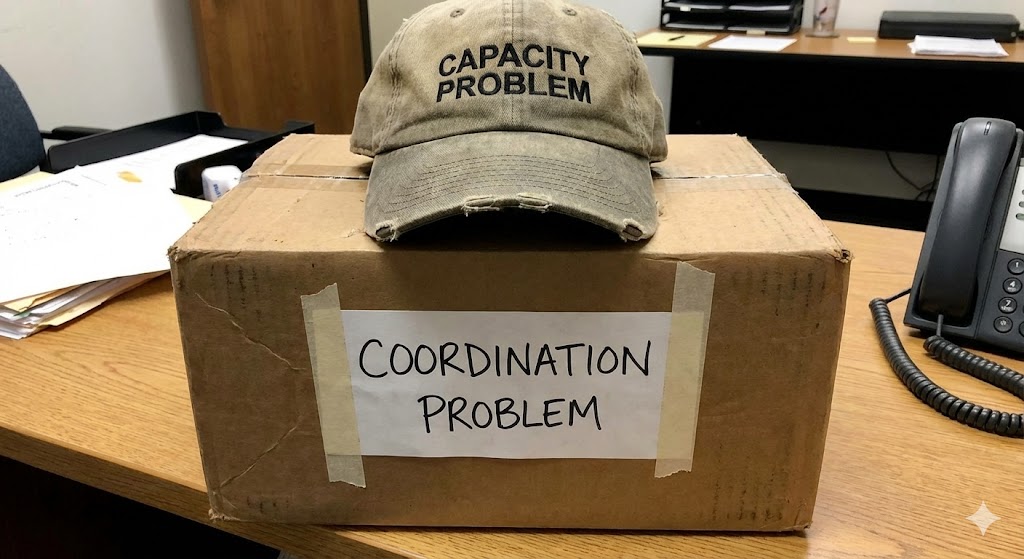
The agentic economy's infrastructure bottleneck is misdiagnosed as a capacity shortage. The actual constraint is coordination waste: agents interfering with each other through retry spirals, fanout amplification, queue contention, and blast radius expansion, converting infrastructure investment into invisible overhead. The waste fraction is not fixed but grows with agent density, meaning overprovisioning structurally breaks at scale. Historical parallel: early steam engines wasted 80-95% of energy before the flyball governor solved coordination without adding capacity. Agentic AI is in its pre-governor era. A coordination layer reading behavioral signals before waste occurs is the missing infrastructure, and the difference between the projected trillions and a very expensive bonfire.
John Lunsford
Founder, CEO
AI Agents

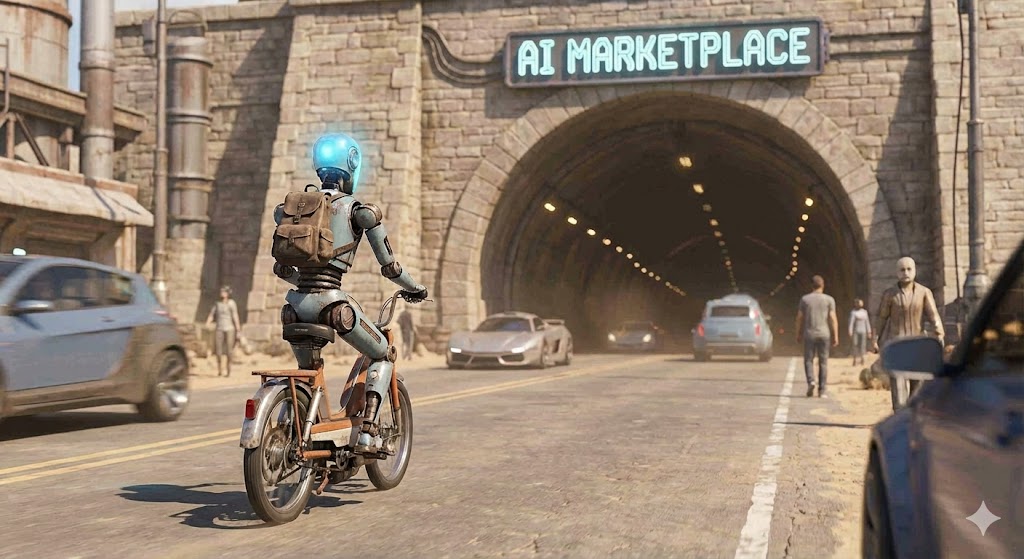
AI agents are not Bots on mopeds. They Are Micro-Platforms With Mobility.

The prevailing mental model of agents as bots running errands produces the wrong infrastructure. Agents are micro-platforms: composites that ingest, produce for ingestion by other agents, extend capabilities at runtime, and traverse environments. Their interaction model is metabolic, not request-response. Platform evaluation frameworks (security, provisioning, efficiency) map partially onto agents, producing dangerous false confidence because the checklist appears complete while hiding the dimensions where agents are fundamentally new. MCP breach data demonstrates the structural pattern: attack surfaces are trajectories, not boundaries, constructed by the agent in real time. The current protocol landscape (MCP, A2A, ACP, UCP) standardizes the socket when the problem is the electricity. The unit of analysis determines the infrastructure, and the unit is wrong.
John Lunsford
Founder, CEO
AI Agents

Affordances Are Bidirectional. We've Only Been Listening to Half the Conversation.

Gibson said a cave affords shelter. He was right, but he was only hearing half the signal. The cave is also communicating outward: its geometry tells the world about the pressures that formed it and whether they are resolved. A mechanic reads the same outward signal in a car's ride. Software does it through behavioral patterns, timing drift, retry acceleration, fanout expansion, that express system state whether or not anyone is listening. We built an entire theory of affordances around what systems offer us. We ignored what they are already telling the world about themselves. The outward signal arrives first. It always has.
John Lunsford
Founder, CEO
AI Agents

What Sound Does Software Make?

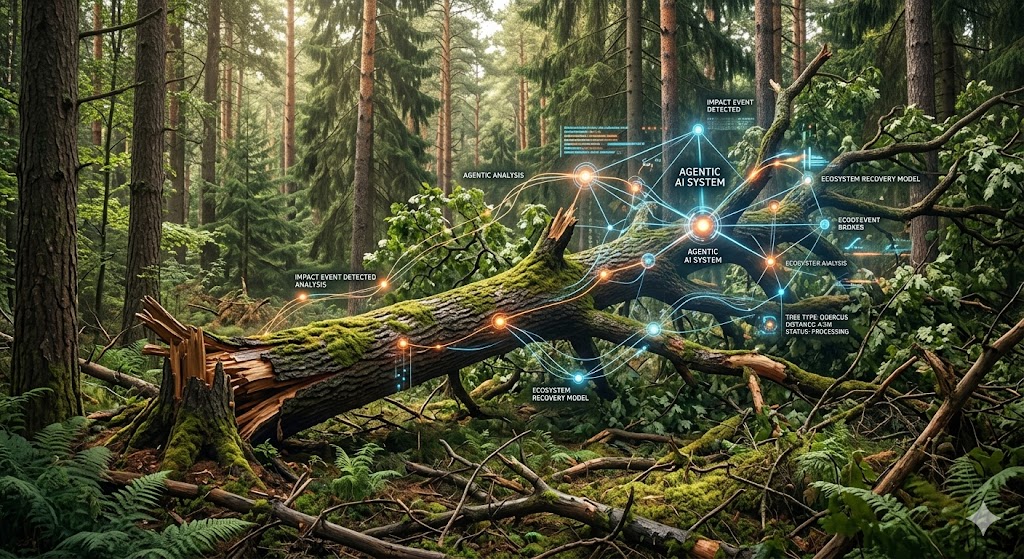
A jackhammer tells you what it is doing through vibration. A subway tells you through screech. What does software tell you when it has no body? The behavioral patterns of machine coordination, timing, retries, fanout, drift, are not telemetry. They are language. And we have been treating a continuous conversation as diagnostic data. This is the intellectual origin of pre-semantic coordination, from game theory in a grad school classroom to the realization that machines arrive at every interaction already speaking.
John Lunsford
Founder, CEO

Bring Your Home to Life

Download Tethral and control it your way.

Vibe-control for your home.
One intelligent agent that connects your devices, understands context, and lets you control everything through conversation or touch.
Get the app
Download on the App StoreGet it on Google Play
Website
Tethral AppAbout UsLicensesContactTerms & Privacy
© 2025 Tethral. All rights reserved. Built with privacy in mind.